
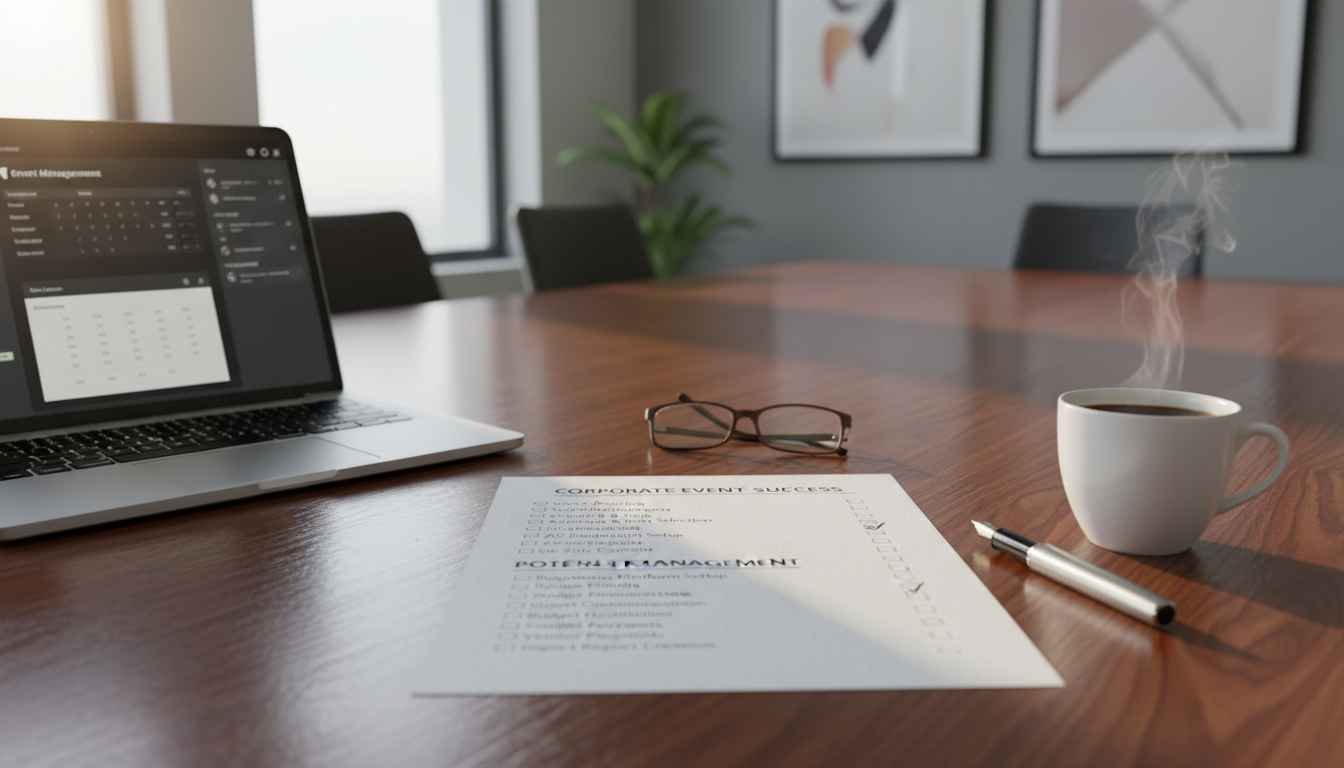
Ever felt the panic of realizing your corporate event is tomorrow and nothing is in place? The fear of missed details, forgotten guests, or technical failures is real. Planning a corporate event is not about glitzy invites or flashy presentations – it is an exercise in precision, discipline, and anticipating everything that could go wrong. This checklist is your confession of the mistakes most planners make and the truth about what keeps events running smoothly.
Before You Start
There are essentials you must secure before diving into planning. They are not optional.
1. Define your objective. Know whether the goal is team building, client engagement, product launch, or recognition. Without clarity, every decision risks being misaligned.
2. Establish a budget range. Pinpoint exactly what is flexible and what is rigid.
3. Confirm the date and venue. Availability dictates everything else, including speakers, catering, and transport.
4. Assign a planning team. Everyone should have a clear role, from logistics to content to communication.
5. Identify key stakeholders. Understand who must approve, participate, or sponsor. Their expectations will shape your checklist.
The Core Checklist
Corporate events succeed when details are neither overlooked nor assumed. Here is a step-by-step outline that separates preparation from guesswork.
Venue and Logistics
Secure the location and inspect it personally. Check for accessibility, capacity, safety compliance, and technical infrastructure. Confirm audio-visual support and backup power options. Parking and transport arrangements should be clearly communicated to all attendees. Nothing is more jarring than last-minute scrambling for space, seating, or screens.
Attendees and Invitations
Create a master guest list and track RSVPs. Include dietary restrictions, mobility needs, and VIP preferences. Send invitations well in advance with reminders. Assign staff to follow up and ensure no one slips through the cracks.
Agenda and Content
Outline the schedule in minute detail. Each session must have a start and end time, speaker confirmation, and contingency plans. Prepare scripts, slides, and handouts. Rehearse transitions and technology. A single poorly timed session can ripple through the day, disrupting perception and engagement.
Catering and Hospitality
Confirm menus, quantities, and timing with caterers. Include options for allergies and preferences. Ensure staff knows when to serve, clear, or replenish. Hydration stations are non-negotiable. Hospitality is not just about food; it is about comfort and perception.
Technology and Equipment
Verify every device, connection, and software used in presentations, live streaming, or displays. Have backup cables, batteries, and redundant systems. Assign a technician to monitor performance in real-time. In corporate settings, a technical hiccup can erode credibility instantly.
Branding and Signage
Ensure all visuals reinforce your corporate identity. Check that banners, name tags, and presentations reflect brand guidelines. Poorly executed signage confuses guests and diminishes perceived professionalism.
Compliance and Risk Management
Review contracts, insurance policies, and safety protocols. Check emergency exits, first aid, and legal requirements. Assign a point person to monitor compliance. Liability exposure is rarely obvious until the worst happens.
History of Corporate Event Planning
The practice of orchestrating corporate gatherings dates back to early 20th-century trade conventions and internal company meetings. Initially, the emphasis was on formal presentations and networking over food. Over decades, planners discovered the subtle psychology of engagement, blending content with experience. By the 1980s, event management began evolving into a discipline with checklists, technology integration, and project management rigor. Modern corporate events reflect a hybrid approach: part strategic communication, part experience design, all grounded in meticulous planning. Understanding this history highlights why every detail matters and why a checklist is no longer optional but essential.
Vendor and Supplier Coordination
Confirm contracts, timelines, and deliverables with every external partner. From audiovisual teams to catering, decorations to transportation, clarity is crucial. Ensure each supplier understands your event vision and timeline. Assign a liaison to manage communication and avoid last-minute misalignment.
Communication and Promotion
Define internal and external messaging. Ensure all attendees receive clear instructions and updates. Confirm social media or press coverage if applicable. Miscommunication is the most overlooked cause of poor event perception. Centralize announcements and reminders to maintain consistency.
Rehearsals and Dry Runs
Conduct complete walkthroughs of the event. Test every presentation, lighting setup, microphone, and signage placement. Timing, flow, and technical reliability are refined in this stage. Never underestimate the difference a single rehearsal can make in avoiding public mistakes.
On the Day
Assign staff to critical checkpoints: registration, speaker support, catering, guest experience, and technical monitoring. Monitor timelines but remain flexible. Unexpected issues will arise; preparedness and delegation are your buffer. Keep an emergency kit for minor repairs, replacements, and first aid.
Post-Event Review
Evaluate feedback from attendees, staff, and vendors. Review budget adherence, logistical successes, and failures. Document lessons learned for future planning. Metrics like attendance, engagement, and satisfaction provide quantifiable insight. A checklist is only complete when its effectiveness is assessed and refined.
Who Should Avoid This
If you approach corporate events casually, relying on memory or assumptions, this checklist may feel overwhelming. Small, informal gatherings with minimal logistics can bypass these steps. But for any event with strategic, financial, or reputational stakes, ignoring detailed preparation invites chaos. Transparency, accountability, and methodical planning are non-negotiable for outcomes that reflect professionalism.
Conclusion
Corporate events are exercises in foresight, precision, and adaptability. The checklist is a confession of common failures: overlooked details, untested technology, and underestimated complexity. Adopting a structured, disciplined approach ensures control over unpredictable elements and elevates outcomes. From defining objectives to post-event analysis, each step represents a safeguard against failure. The truth is simple: meticulous planning separates memorable events from forgettable ones. For planners seeking guidance, Iclr offers structured resources and best practices that align with industry standards and elevate event execution beyond expectation.