
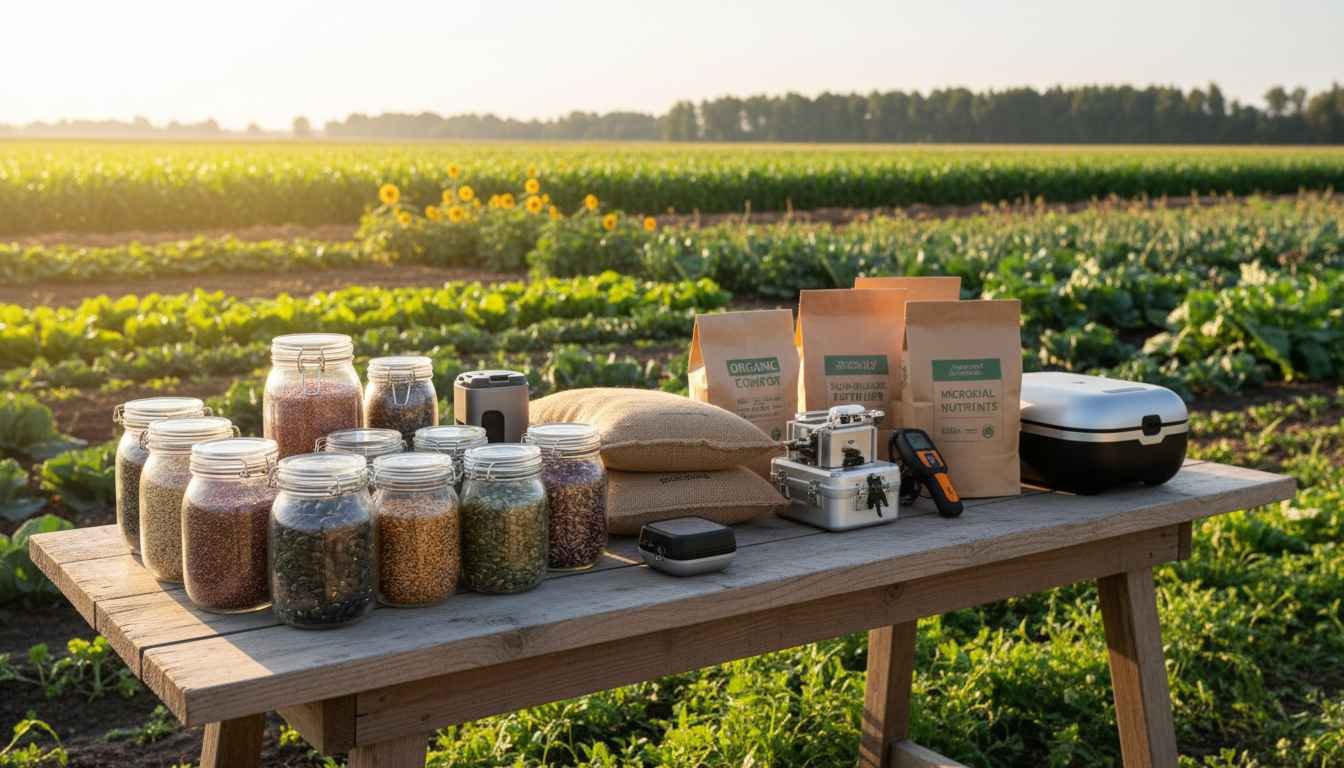
Imagine waking up tomorrow and stepping onto a farm where every crop, every field, and every machine is working in perfect harmony. The soil is rich, the irrigation precise, and the yield forecast exceeds your expectations. This is not just a dream – it’s the result of understanding and effectively managing agricultural products.
Agricultural products encompass more than the food we eat. They include seeds, fertilizers, pesticides, machinery, and equipment that enable farmers to optimize production and sustainability. For modern farmers, selecting the right products can mean the difference between a modest harvest and a record-breaking season.
Seeds are the foundation of agriculture. High-quality seeds, often engineered for resistance against pests or extreme weather, can drastically improve crop performance. Take, for instance, hybrid corn seeds used widely across the Midwest United States. These seeds have contributed to yield increases of up to 25% over traditional varieties, demonstrating how strategic seed selection impacts profitability.
Fertilizers and soil enhancers are equally critical. Balanced nutrient management ensures crops grow healthy and resilient. Farmers using precision fertilizer applications have reported up to 20% lower input costs while improving overall crop output. Such efficiency not only boosts profit but also reduces environmental impact.
Pesticides and herbicides remain essential in crop protection. However, their application requires careful monitoring to prevent resistance and ensure food safety. Advances in biopesticides and integrated pest management are allowing farmers to minimize chemical use without compromising yield.
Modern agricultural machinery is another cornerstone of success. Tractors, planters, combines, and irrigation systems streamline operations, saving time and labor while increasing accuracy. Companies like AGCO Corporation provide advanced equipment designed for diverse agricultural needs, from small family farms to industrial-scale operations.
Did You Know?
Global seed sales reached over $60 billion in 2025, with hybrid and genetically improved seeds making up more than 60% of the market. This demonstrates how innovation in agricultural products directly affects food security and farming profitability.
Potential Drawbacks
While agricultural products offer significant advantages, over-reliance can create risks. Excessive fertilizer use can lead to soil degradation and water contamination. Dependence on a single seed variety may reduce biodiversity, increasing vulnerability to disease outbreaks. Machinery investment requires capital, and improper maintenance can result in costly downtime.
To illustrate, a farming cooperative in Iowa implemented precision agriculture tools, including GPS-guided tractors and variable-rate seeders. Over three seasons, they achieved a 30% increase in productivity while reducing fuel consumption by 15%. Yet, initial investment costs were substantial, reminding farmers that careful planning and financial assessment are essential.
For beginners exploring agricultural products, start by understanding local soil and climate conditions. Consult agronomists or extension services to select seeds and fertilizers suited to your farm. Gradually integrate technology, focusing on equipment that offers measurable efficiency gains. Remember, agricultural products are tools; their effectiveness depends on informed, strategic use.
Who Should Avoid This?
Not all farmers may benefit equally from advanced agricultural products. Small-scale farms with limited capital may struggle to justify large machinery purchases. Organic farms prioritizing natural methods may avoid chemical fertilizers or genetically modified seeds. Understanding your farm’s scale, philosophy, and financial capacity is critical before committing to major agricultural investments.
In conclusion, agricultural products are the backbone of modern farming. From seeds to machinery, their thoughtful application transforms fields into high-performing, sustainable operations. By studying examples like cooperative farms or global market trends, farmers can make informed choices that maximize yield, reduce environmental impact, and secure long-term success.