Every parent has heard that children should read every day, yet turning that advice into a habit that survives busy evenings, homework battles and screen time is harder than it sounds. A reading routine for children works when it is small, predictable and enjoyable — not when it feels like another assignment. This guide shows you how to build a daily reading habit that fits your family’s real life, from choosing the right time to picking books your child actually wants to open.
Why a Daily Reading Routine for Children Matters
Reading a little every day builds skills that occasional long sessions cannot. Vocabulary grows through repeated exposure to new words in context, and comprehension improves as children learn to follow longer stories and ideas. Just as importantly, a steady reading routine for children strengthens focus: sitting with a book for fifteen or twenty minutes trains the same attention muscles children need in the classroom.
The benefits go beyond school results. Shared reading time gives parents and children a calm, screen-free moment together, and children who read for pleasure tend to approach other learning tasks with more confidence. If your child struggles with self-belief, our guide on helping a shy child build confidence shows how small daily wins, including reading wins, add up.
Start Smaller Than You Think
The most common mistake is starting too big. A child who rarely reads will not suddenly manage forty-five minutes a night. Begin with ten minutes — an amount so manageable that skipping it feels harder than doing it. Once ten minutes feels normal, add five more. Within a few weeks most children settle comfortably into twenty or thirty minutes.
Consistency matters more than length. Ten minutes every day beats an hour once a week, because the routine becomes part of the day rather than an event. Think of it the way you would think of brushing teeth: short, daily and non-negotiable, but never a punishment.
Choose the Right Time and Place
A routine sticks when it is anchored to something that already happens every day. Popular anchors include straight after dinner, after bath time, or the twenty minutes before lights out. Avoid scheduling reading immediately after school if your child needs to move and decompress first, and avoid competing with their favourite television programme — reading should not feel like the thing that took something fun away.
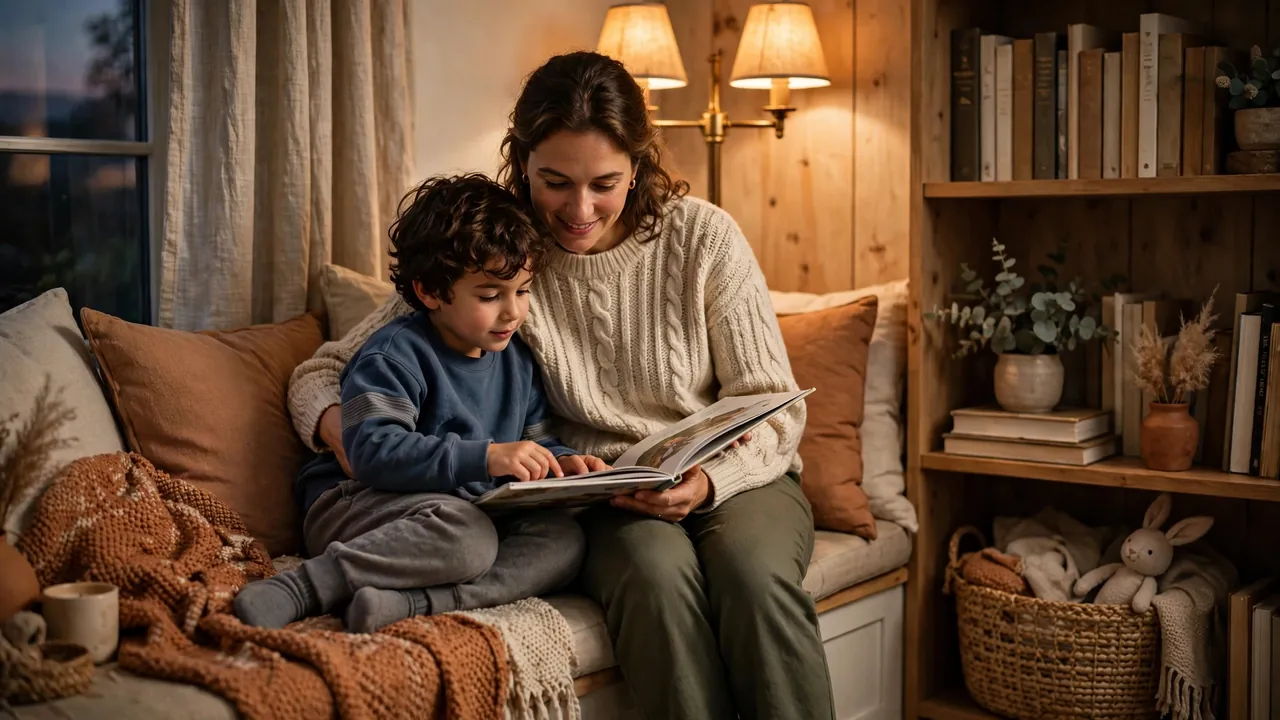
Create a small reading spot: a chair, a cushion corner, a blanket and decent light. It does not need to be elaborate, but it should be the same place each time, with books within reach and phones out of it. Younger children especially respond to the ritual of going to “our reading place”.
Let Your Child Choose the Books
Children read more when they choose what to read. Comics, graphic novels, joke books, football annuals and magazines all count — the goal is time spent reading, not a particular genre. Take your child to the library or bookshop regularly and let them browse without steering them toward what you think they should read.
That said, gentle guidance helps. Keep a mix available: one book slightly below their level for easy, confidence-building reading, one at their level, and one they are curious about even if it looks hard. Reading aloud together is a good way to tackle the harder book. For older children, connecting reading to their other interests works well; a child who loves football will often devour a player’s biography.
Make It Interactive, Not a Test
Nothing kills a reading habit faster than turning every session into a quiz. Instead of testing your child afterwards, chat about the book the way you would chat about a film: Who was your favourite character? What do you think happens next? Would you have done the same thing? These conversations build comprehension naturally and show your child that their opinions about books matter.
With younger children, point at pictures, let them finish familiar sentences, and let them “read” memorised favourites to you. With older children, reading the same book in parallel — a mini family book club — can spark brilliant discussions. The strategies in our guide to using mind maps for studying can also help older readers organise what they have read when a book matters for school.
Handle Resistance Without a Fight
Most children resist at some point. Before assuming laziness, check the basics: is the book too hard? Is the time wrong? Are they simply tired? A child who stalls, guesses words wildly or loses the thread of the story may need easier material, and there is no shame in stepping down a level — fluent, happy reading at an easier level builds more skill than struggling through a hard book.
Protect the routine from becoming a battleground. If a session goes badly, end it early and try again tomorrow. Never withdraw reading as a punishment or force extra reading as one; both teach children that books are a chore. If homework is crowding out reading time, our tips on avoiding procrastination during homework can help you reclaim those evening minutes.
Build Independence Gradually
The long-term goal is a child who reads without being asked. You can move toward it step by step: first you read aloud, then you take turns reading pages, then your child reads alone while you sit nearby, and finally reading becomes their own quiet activity. Our guide on encouraging independence and self-discipline in kids covers this gradual handover in more depth.
A simple reading log on the fridge helps many families: the child colours in a square for every day they read. Watching the chain grow is motivating, and a broken chain is a gentle prompt rather than a failure. Some families add a small weekly reward, such as choosing the weekend film, once the streak reaches a month.
A Sample Week to Get You Started
Here is a realistic first week. Days one and two: ten minutes before bed, child chooses the book, parent reads or shares. Days three and four: fifteen minutes, child reads aloud for part of it. Day five: a library visit to choose the weekend book. Days six and seven: twenty minutes in the reading spot, followed by a chat about the best part of the story. From week two, hold the time steady and let the books do the work.
As the habit settles, you can connect it to wider study skills: a child with a reading routine usually finds it easier to build a study schedule that actually works when exams approach, because structured daily practice already feels normal.
The Bottom Line
A reading routine for children is not built in a day, and it does not need expensive resources — just a regular time, a comfortable place, books your child likes and a parent who treats reading as a pleasure rather than a test. Start with ten minutes tonight, protect the habit for a month, and you will likely find your child asking for “just one more chapter” — the surest sign the routine has taken root.