
Unveiling the Power of Inquiry-Based Learning
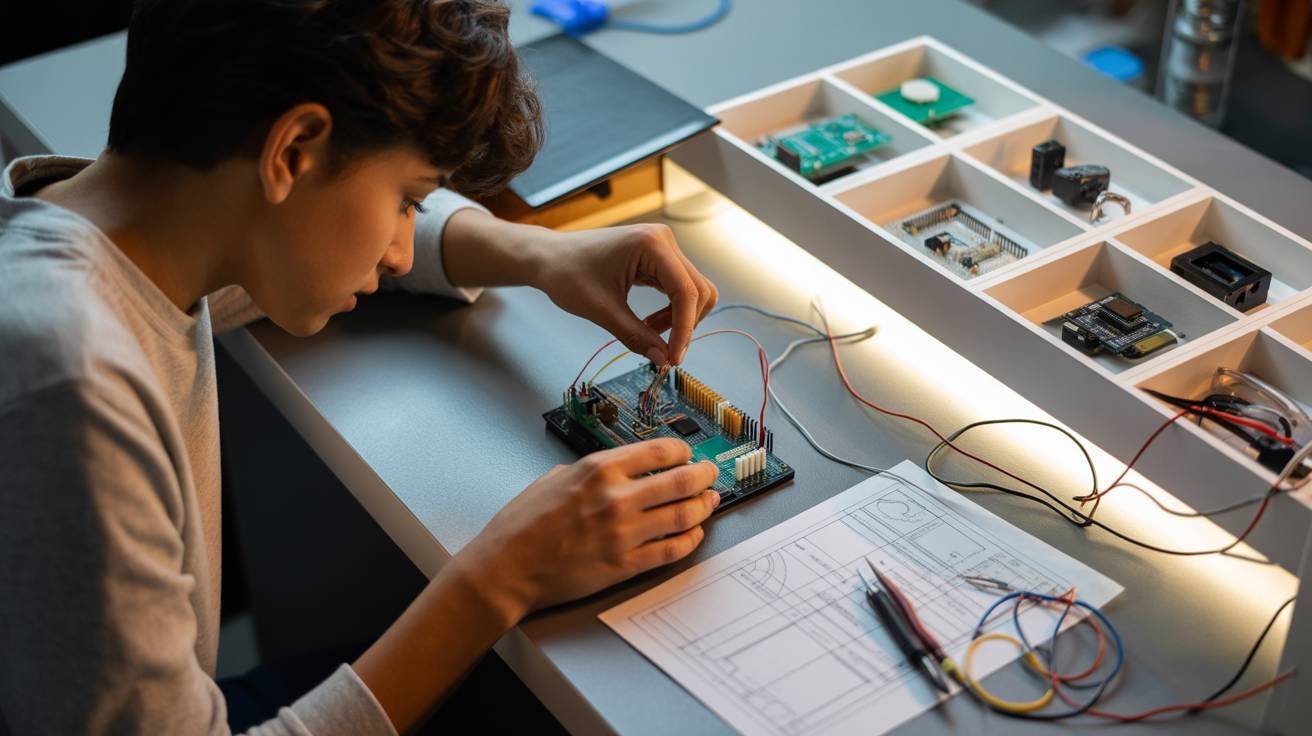
In the ever-evolving landscape of education, the urgency to embrace innovative learning methodologies has never been more pronounced. Inquiry-based learning (IBL) emerges as a transformative force, igniting curiosity and fostering a deeper connection with scientific concepts. Unlike traditional rote memorization, IBL propels students into immersive, hands-on exploration, where questions are the catalysts for discovery. Imagine a classroom buzzing with the electric energy of students actively designing experiments, hypothesizing outcomes, and analyzing real-world phenomena. Every touch of a beaker, every flicker of a microscope slide becomes a gateway to deeper understanding. In this dynamic environment, knowledge is not just absorbed – it is internalized, retained, and applied with precision. The urgency for educators to adopt IBL stems from the irreplaceable advantage it offers: students not only learn science but experience it in a way that resonates long after the lesson ends. The stakes are high, as delaying this shift could leave learners lagging behind in critical thinking, problem-solving, and scientific literacy.
Bridging Curiosity with Real-World Application
Inquiry-based learning thrives on the seamless integration of curiosity and real-world relevance. Consider a classroom where students explore the physics behind roller coaster loops or the chemical reactions in everyday cooking. Each inquiry is not an abstract exercise; it is a vivid, sensory-rich experience that mirrors the complexities of the world outside the classroom. When students investigate phenomena with tangible outcomes, their retention skyrockets because the brain links learning with context, emotion, and purpose. Research has consistently shown that hands-on engagement strengthens memory retention far beyond passive reading. For example, a student analyzing water pollution samples not only understands the chemical processes involved but also grasps the societal and environmental consequences. The immediate feedback loop of inquiry-based learning ensures that knowledge is cemented, not fleeting. Ignoring this approach risks leaving students with superficial understanding, whereas embracing it cultivates learners who can think critically, innovate, and navigate the complexities of scientific challenges with confidence and urgency.
Elevating Cognitive Retention Through Active Exploration
The cognitive benefits of inquiry-based learning extend far beyond traditional memorization. When students are immersed in problem-solving and active exploration, the brain engages multiple neural pathways, reinforcing knowledge in a holistic manner. Visual, tactile, and analytical senses work in tandem, creating a rich mosaic of memory associations. Imagine the sensation of observing a chemical reaction’s vivid color transformation, the tactile engagement of adjusting a microscope, and the analytical rigor of interpreting data – all converging to solidify understanding. Unlike passive note-taking, IBL embeds lessons within lived experiences, making recall automatic and instinctual. Verified studies from leading educational researchers demonstrate that students in inquiry-focused classrooms outperform their peers in long-term retention and concept mastery. The FOMO for educators and parents is palpable; failing to integrate these methods risks leaving students in an outdated paradigm, unprepared for advanced scientific inquiry and competitive academic arenas.
The Role of Question-Driven Learning in Science
At the heart of inquiry-based learning lies the transformative power of questions. Students are not merely recipients of knowledge; they are architects of discovery. By formulating questions, designing experiments, and interpreting outcomes, learners cultivate critical thinking, problem-solving, and adaptive reasoning skills that persist well beyond the classroom. Picture a student observing plant growth under varying light conditions, hypothesizing why differences occur, and recording meticulously detailed results. This process stimulates intellectual curiosity, emotional engagement, and cognitive retention simultaneously. Real-world examples, such as students developing eco-friendly water filtration systems or analyzing energy consumption patterns, demonstrate how IBL encourages scientific literacy while nurturing a sense of agency. Educators who delay adopting this methodology risk stagnation, whereas those who act decisively empower students to transform curiosity into actionable knowledge with measurable, lasting impact.
Integrating Technology to Enhance Inquiry-Based Experiences
Technology acts as a powerful amplifier in the inquiry-based learning paradigm, providing access to simulations, virtual labs, and interactive data analysis tools. Imagine students conducting complex experiments in a virtual laboratory, adjusting variables, and observing immediate results – all while maintaining meticulous digital records. This integration not only broadens the scope of inquiry but also accelerates retention by linking abstract scientific principles with immersive visual and interactive experiences. Incorporating technology also facilitates personalized learning, enabling each student to explore at their own pace and depth. The FOMO is stark; institutions that fail to leverage technological enhancements may deprive students of crucial engagement and retention opportunities. Furthermore, evidence from educational technology studies underscores that students who use interactive platforms alongside inquiry-based methodologies demonstrate significantly higher knowledge retention and confidence in applying scientific concepts. In today’s fast-paced world, embracing technology-enhanced IBL is not optional – it is an urgent imperative.
Transforming Learning Through Collaboration and Communication
Inquiry-based learning is inherently collaborative, requiring students to share ideas, challenge assumptions, and communicate findings effectively. Picture a vibrant laboratory where students debate hypotheses, present experimental designs, and collectively analyze outcomes, each voice contributing to a richer understanding. This collaborative environment reinforces knowledge retention, as discussing concepts, defending positions, and teaching peers deepens comprehension. Real-world examples abound, from students designing renewable energy solutions in teams to peer-reviewed science fairs that showcase iterative learning and problem-solving. The urgency for schools to adopt these collaborative IBL models is underscored by research indicating that social learning accelerates cognitive retention and fosters critical interpersonal skills. Without these immersive experiences, learners risk developing fragmented understanding and diminished engagement. Conversely, students immersed in collaborative inquiry emerge as confident communicators and innovative problem-solvers, fully equipped for scientific challenges and beyond.
Maximizing Knowledge Retention with Experiential Feedback Loops
Feedback is the lifeblood of inquiry-based learning. Students thrive when their experiments yield tangible results, allowing immediate reflection and adjustment. Consider a chemistry lab where a student’s initial hypothesis about reaction rates is disproven; this moment of surprise sparks deeper investigation, critical analysis, and refined experimentation. The iterative feedback loop reinforces memory retention, turning errors into essential learning milestones. Verified educational research shows that students exposed to cyclical experimentation and reflection outperform peers in long-term knowledge retention. Beyond cognitive gains, this methodology cultivates resilience, adaptability, and a scientific mindset. The FOMO is palpable – educators and parents must act swiftly to integrate IBL feedback mechanisms, or risk consigning students to rote learning environments devoid of deep understanding and experiential growth.
Financial Literacy Integration: Leveraging Education Beyond Science
Inquiry-based learning principles are not limited to natural sciences; they extend seamlessly into financial literacy education. By integrating concepts from finance education books, students can explore budgeting, investment simulations, and real-world economic modeling through inquiry-driven activities. Imagine students analyzing market trends, predicting outcomes, and adjusting strategies in simulated portfolios, mirroring professional financial environments. This experiential learning links theory to practice, ensuring that financial knowledge is internalized and retained. The demand for financially literate individuals is escalating, and students who engage in inquiry-based financial exercises gain a competitive edge, bridging scientific reasoning with fiscal acumen. Ignoring this integration risks depriving learners of essential life skills, while embracing it empowers them to navigate personal and professional financial landscapes confidently, armed with insights drawn from authoritative finance education books.
Proven Outcomes and Real-World Success Stories
The evidence for inquiry-based learning’s efficacy is compelling. Across the globe, students immersed in IBL programs demonstrate higher retention rates, advanced problem-solving capabilities, and enhanced scientific literacy. For instance, schools implementing IBL frameworks report measurable gains in standardized assessments and student engagement metrics. Real-world testimonials underscore transformative experiences: students describe vivid memories of experiments that ignited curiosity and fostered enduring understanding, educators attest to heightened classroom participation, and parents note remarkable improvements in critical thinking and applied knowledge. Trusted industry sources, including academic journals and verified educational institutions, confirm that inquiry-driven methodologies not only improve retention but also cultivate transferable skills essential for higher education and careers. The urgency is undeniable – delaying adoption means students miss out on proven pathways to academic excellence and real-world competence, while early adopters enjoy measurable, lasting benefits that resonate well beyond the classroom.
Call to Action: Transform Learning Today
The time to act is now. Embracing inquiry-based learning offers an unparalleled opportunity to revolutionize scientific knowledge retention and equip students with the skills required for tomorrow’s challenges. Integrating this methodology with cutting-edge technology, collaborative experiences, and real-world applications – including insights from authoritative finance education books – ensures learners are prepared, confident, and ahead of the curve. Educators, parents, and institutions must seize this moment, adopting inquiry-based frameworks to foster curiosity, retention, and lifelong learning. Verified success stories, rigorous studies, and industry best practices underscore that this is not a trend – it is a transformative paradigm. Delay no longer; invest in inquiry-based learning today, and watch students thrive as engaged, insightful, and scientifically literate innovators.
If you want to enhance the understanding of STEM concepts through hands-on experience, consider how horace cooper education can play a pivotal role in utilizing virtual labs for innovative learning approaches.