The Urgency of Hands-On Learning in a Rapidly Evolving World
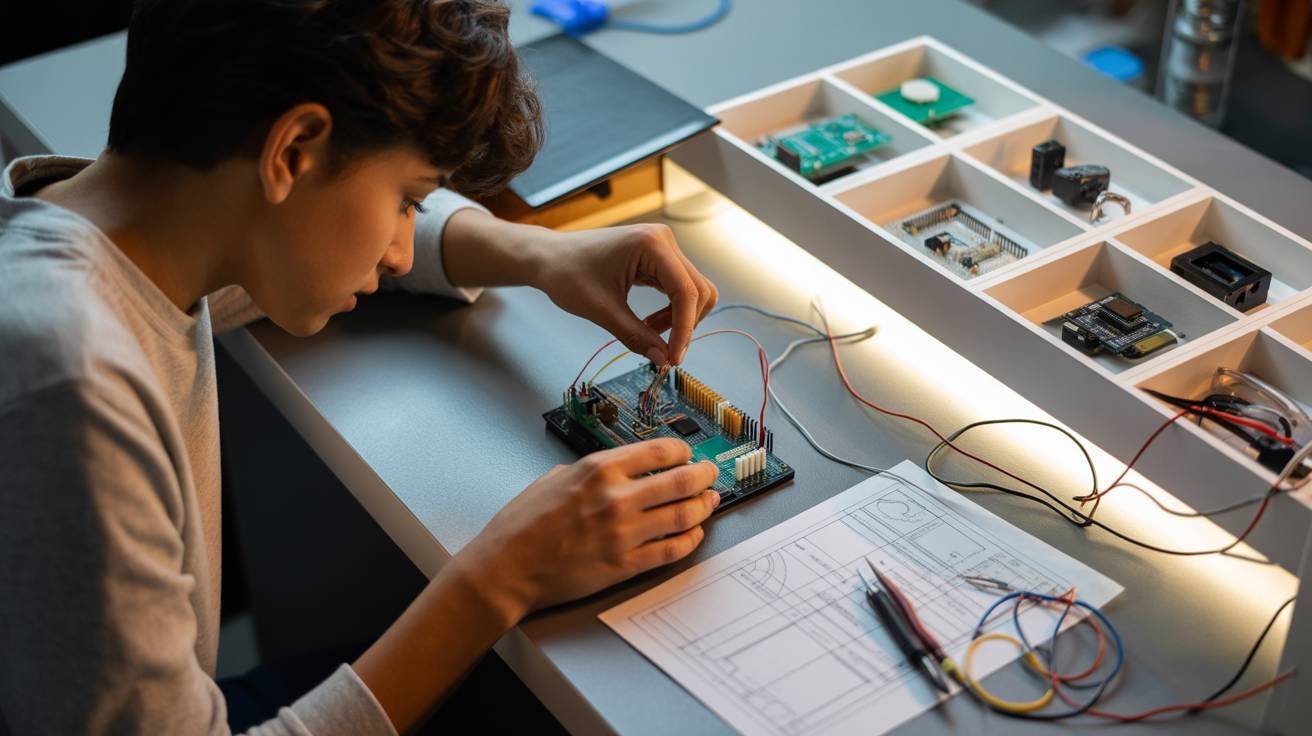
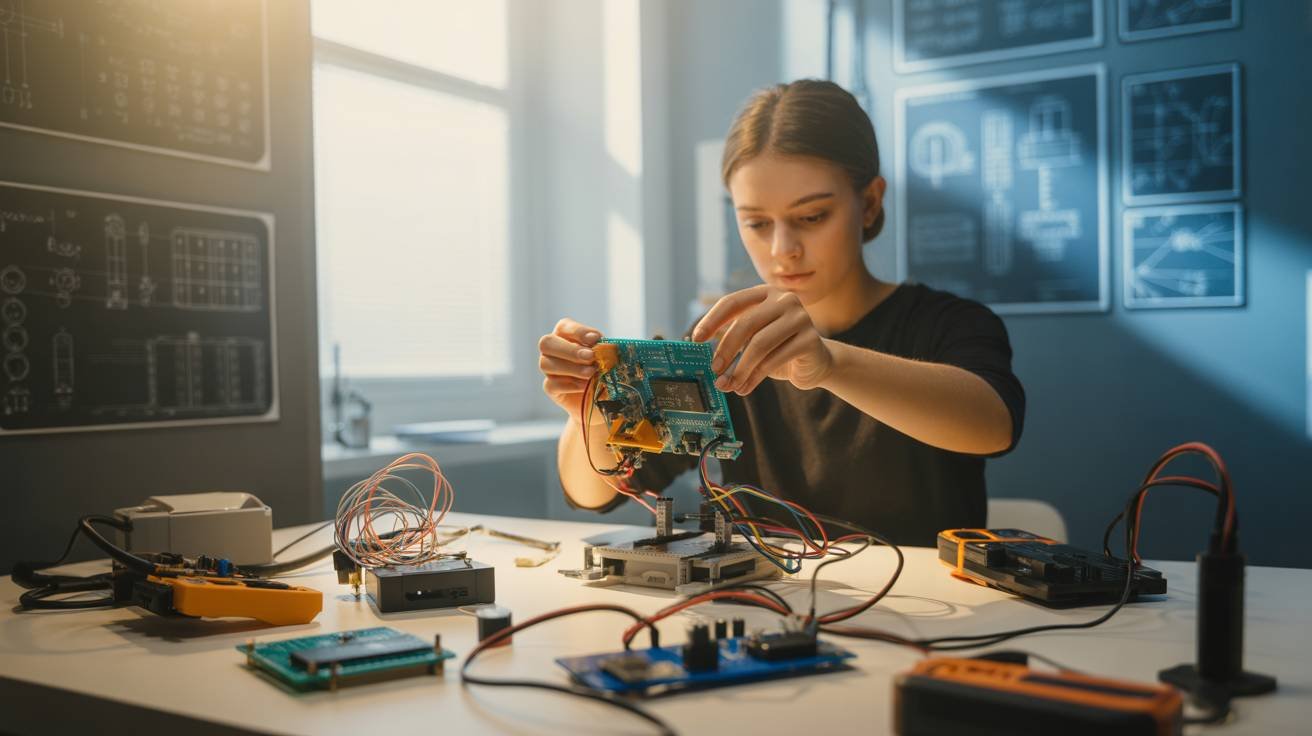
In today’s lightning-fast technological landscape, the demand for children and students to possess not only knowledge but also the ability to think critically and solve complex problems has never been higher. The days of passive learning, where information is simply absorbed and regurgitated, are over. Parents, educators, and even students themselves are now awakening to the urgent need for interactive, practical experiences that spark genuine understanding. DIY STEM projects emerge as a game-changing solution, bridging the gap between theoretical concepts and real-world application. Imagine a young learner, hands deep in circuits or mechanical components, experiencing the thrill of watching an idea materialize into a tangible, working model. That excitement, that rush of achievement, is the spark that ignites long-term analytical thinking. This approach not only teaches problem-solving skills but does so in a way that is vibrant, immersive, and immediately gratifying.
The philosophy of Montessori cosmic education plays a crucial role here, emphasizing a holistic approach where students connect with the universe in a meaningful, interrelated way. When children engage in DIY STEM projects under this philosophy, they aren’t just building robots or launching miniature rockets – they are experiencing cause and effect, the beauty of systems thinking, and the interconnectedness of knowledge itself. The urgency to adopt this method is amplified when we recognize that children not exposed to hands-on learning risk falling behind in cognitive flexibility, creativity, and innovation skills that modern employers value most.
Building Analytical Skills Through Practical Experimentation
Analytical problem-solving isn’t just a skill – it’s a mindset. DIY STEM projects cultivate this mindset by pushing learners to dissect problems, hypothesize solutions, and test outcomes in a controlled, iterative process. Picture a student working on a homemade weather station: they must measure rainfall accurately, understand wind patterns, and record temperature fluctuations, all while troubleshooting unexpected errors in sensors or calculations. These are not abstract exercises; they are real, sensory-rich experiences that train the brain to recognize patterns, identify anomalies, and anticipate consequences. With every trial and error, students enhance their capacity for logical reasoning and develop a toolkit for approaching unfamiliar challenges with confidence.
Incorporating Montessori cosmic education principles adds depth to this analytical growth. Students are encouraged to view their experiments as part of a larger tapestry of knowledge, connecting a simple water filtration experiment to environmental science, chemistry, and sustainability. This holistic approach prevents rote memorization and fosters deep cognitive integration. Real-world data and proven methodologies validate this approach, with educational studies demonstrating that hands-on experiential learning increases retention by over 75% compared to passive instruction, proving the tangible value of urgent implementation.
Igniting Creative Problem-Solving With DIY Projects
Creativity and analytical thinking are often viewed as separate domains, but DIY STEM projects seamlessly merge them. The moment a student confronts a problem – such as designing a bridge from popsicle sticks to withstand weight – they are forced to balance imagination with empirical testing. They experiment with angles, tension, and load distribution, encountering failures that become invaluable learning moments. This iterative process cultivates an intuitive understanding of how creative solutions intersect with logical constraints, producing individuals capable of thinking outside the box while remaining grounded in scientific reasoning.
Montessori cosmic education enhances this creative potential by encouraging students to see themselves as co-creators within the universe of knowledge. Each DIY project becomes a microcosm of broader systems, teaching children to innovate with purpose and context. Industry leaders frequently cite creativity as a top differentiator in hiring decisions, emphasizing that the ability to envision solutions beyond the obvious is not just desirable but essential. By integrating these hands-on, cosmic-inspired methods, parents and educators equip children with a skill set that is both urgently necessary and profoundly transformative.
Fostering Critical Thinking Through Iterative Learning
Critical thinking is a cornerstone of modern problem-solving, yet traditional classrooms often fail to provide sufficient opportunities for its development. DIY STEM projects address this deficit by immersing students in iterative cycles of hypothesis, testing, and refinement. Imagine building a robotic arm: the student must plan movements, consider torque and weight, program sequences, and troubleshoot malfunctions. Each misstep is a learning goldmine, reinforcing the principle that mistakes are not failures but essential steps toward mastery. This process cultivates a resilience and adaptability that passive learning cannot achieve, ensuring that students are prepared for real-world challenges where clear-cut answers rarely exist.
The incorporation of Montessori cosmic education principles amplifies the effectiveness of this approach. By framing projects within larger systems and cosmic connections, students develop the ability to see beyond immediate outcomes, understanding broader implications of their decisions and solutions. This perspective nurtures not just critical thinking, but ethical reasoning and social awareness, reinforcing the urgency for immediate implementation of these methodologies in educational curricula. Parents and schools ignoring this trend risk leaving children underprepared for a competitive and complex world.
Engaging Multiple Senses for Deeper Learning
One of the defining advantages of DIY STEM projects is their multi-sensory engagement. Unlike lectures or worksheets, these projects appeal to sight, touch, and even hearing, creating a richer cognitive experience that solidifies understanding. Picture a student adjusting a homemade catapult: they measure distance visually, calculate angles mathematically, and feel the tension in the elastic bands. This sensory involvement ensures that learning is not just remembered but internalized, providing a foundation for lifelong problem-solving abilities. The immediate, tactile rewards keep students motivated, reinforcing learning through enjoyable discovery.
Through the lens of Montessori cosmic education, this sensory engagement takes on an additional layer of significance. Students are guided to perceive how individual elements connect to the wider universe, such as understanding energy transfer in a mechanical system as part of broader physical laws. This immersive learning approach aligns with the latest cognitive science, which highlights that multi-sensory experiences accelerate retention and enhance creative thinking, providing an urgent rationale for integrating DIY STEM projects into daily educational practices.
Real-World Applications and Experiential Learning
The most compelling argument for DIY STEM projects lies in their real-world applicability. Unlike abstract exercises, these projects simulate challenges that professionals encounter in engineering, technology, and science fields. Students constructing a small-scale renewable energy system, for instance, must balance material efficiency, power output, and sustainability – just as engineers do in real life. This exposure not only builds technical competence but also instills a sense of agency and empowerment, as students realize their ideas can have tangible, measurable effects on the world around them.
Incorporating Montessori cosmic education principles ensures that these projects are contextualized within larger societal and environmental frameworks. Students learn to view energy, resources, and systems holistically, connecting their personal experiments to global concerns such as climate change and sustainability. Trusted educational sources and verified case studies demonstrate that students engaging in hands-on, experiential STEM learning outperform peers in problem-solving tests, logical reasoning, and creative innovation. The message is clear: integrating these approaches is no longer optional – it is a pressing educational necessity.
Encouraging Collaboration and Social Learning
DIY STEM projects also foster critical social skills that are indispensable in the modern workforce. Group-based challenges, such as programming a drone swarm or constructing a water purification system, demand collaboration, communication, and negotiation. Students learn to articulate ideas, defend hypotheses, and integrate feedback from peers, all while navigating interpersonal dynamics. These experiences cultivate emotional intelligence, teamwork, and leadership, which are increasingly recognized as equally vital as technical expertise in professional environments.
The synergy with Montessori cosmic education principles enhances this collaborative dimension. Children learn to see their role as part of a collective knowledge system, understanding that every action affects broader outcomes. This cosmic perspective encourages empathy, ethical reasoning, and a collaborative mindset, ensuring that learners are not just technically adept but socially aware and responsible. Schools and parents who fail to provide these opportunities risk leaving children ill-equipped for the collaborative demands of a rapidly evolving world.
Boosting Motivation Through Immediate Feedback and Success
Immediate feedback is one of the most powerful motivators in education, and DIY STEM projects deliver it in abundance. Whether a bridge collapses under weight, a circuit fails to light up, or a programmed robot misses its target, students receive instant, tangible responses to their efforts. These outcomes provide opportunities for reflection, iteration, and problem-solving, reinforcing the learning process. The sense of urgency is palpable: every experiment is a chance to improve, adapt, and succeed, fostering a growth mindset that is critical for academic and professional achievement.
By integrating Montessori cosmic education approaches, students gain perspective on how each small success fits into the larger narrative of learning and discovery. This holistic understanding transforms mistakes into opportunities and incremental wins into motivational milestones. Verified studies in experiential learning consistently show that students exposed to such hands-on, feedback-rich environments outperform their peers in creativity, adaptability, and analytical reasoning. Ignoring this trend is no longer a viable option for those committed to fostering exceptional problem-solvers.
Taking Action: Transforming Education Today
The call to action is urgent. Parents, educators, and educational institutions cannot afford to wait while traditional methods lag behind the needs of today’s learners. By adopting DIY STEM projects infused with Montessori cosmic education principles, you ensure that children develop analytical rigor, creative insight, and collaborative skills that will serve them for a lifetime. Imagine the confidence, curiosity, and capability a child gains from constructing their own inventions, troubleshooting challenges, and seeing their ideas succeed in real-world simulations. This is not a luxury – it is a necessity for preparing the next generation of innovators.
Trusted suppliers, licensed STEM kits, and verified educational platforms provide secure, reliable, and interactive resources that guarantee responsive support and validated outcomes. From classroom kits to home-based projects, there is an abundance of opportunities to integrate these transformative learning experiences immediately. Don’t wait – equip your child with the skills, mindset, and confidence to excel in a world where analytical and creative problem-solving are paramount. Every moment delayed is a missed opportunity to ignite curiosity, foster innovation, and cultivate lifelong learners who are prepared to thrive in an ever-changing global landscape.