
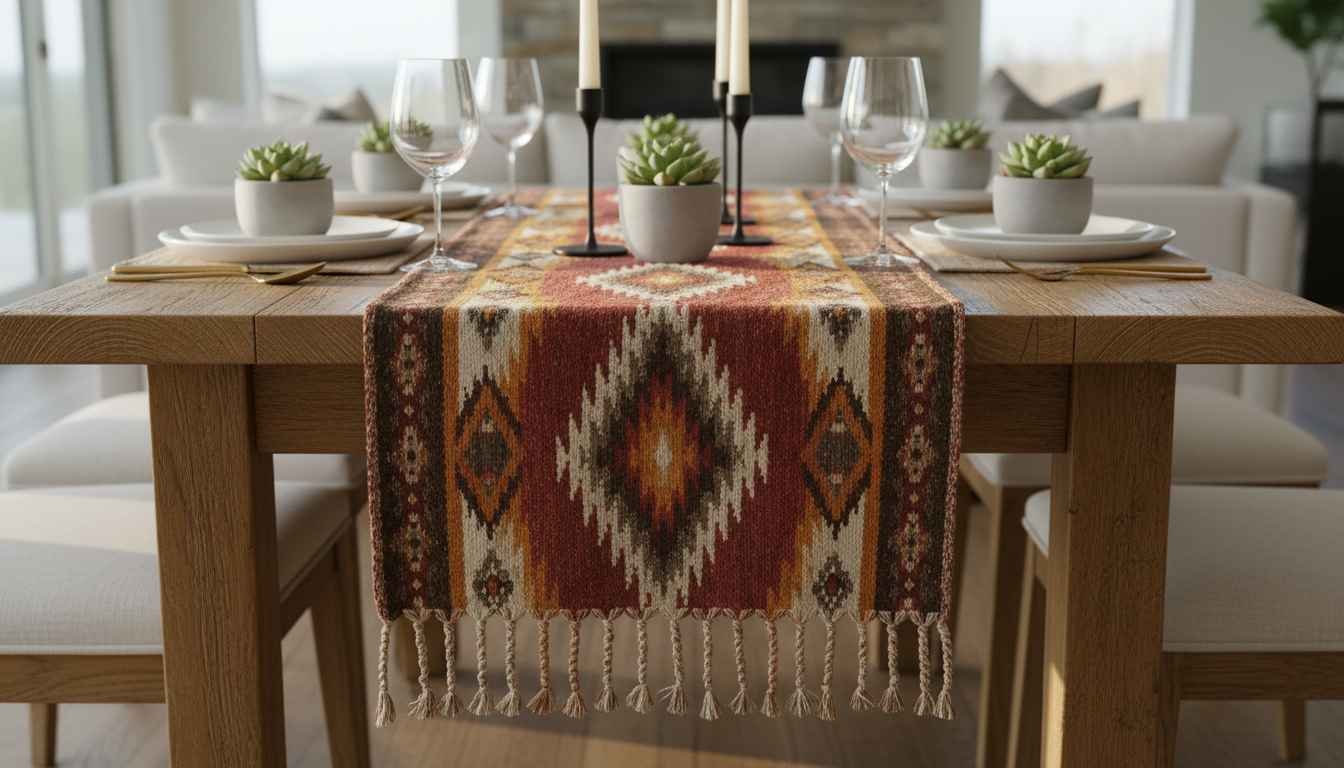
This is not a magic pill, but the subtle presence of a western table runner can dramatically transform a dining space, bridging rustic charm with contemporary elegance. For enthusiasts of off-grid and sustainable living, these table runners serve not only as decorative elements but also as practical additions that protect surfaces while reflecting a connection to nature and heritage. Understanding the nuances of fabric choice, pattern selection, and functional placement is essential for achieving a cohesive design.
Historical Context and Design Evolution
Western table runners trace their aesthetic roots to the American frontier era, where handcrafted textiles served both utilitarian and decorative purposes. Early iterations featured natural fibers such as cotton, wool, and linen, often hand-embroidered with motifs inspired by cattle ranching, desert landscapes, and Native American artistry. Over time, these motifs evolved to incorporate more stylized geometric patterns and muted earth tones, aligning with modern interior sensibilities. Recognizing this historical trajectory allows homeowners to select designs that resonate authentically while complementing contemporary furniture layouts.
Material Selection and Sustainability Considerations
One of the most critical factors in integrating a western table runner into a home is the choice of material. Organic cotton and hemp remain popular for their durability and low environmental impact. Linen, though slightly more delicate, offers a sophisticated texture suitable for formal dining arrangements. Synthetic blends are also available, often treated for stain resistance, but they may compromise the tactile warmth and authenticity associated with traditional western motifs. For off-grid enthusiasts, prioritizing sustainable and ethically sourced materials can reinforce a lifestyle that values minimal environmental impact while maintaining aesthetic quality.
Color Palettes and Pattern Strategies
The color palette of a western table runner significantly influences its visual integration. Earth tones such as rust, ochre, sage, and deep brown echo natural landscapes, fostering a grounded and cohesive atmosphere. Pattern strategies often involve alternating bands, diamond motifs, or subtle tribal-inspired prints. A successful design balances complexity with subtlety; overly intricate patterns may overwhelm a minimalist dining area, whereas too simple a pattern can appear disconnected from the thematic intent. Layering runners with neutral placemats or textured table surfaces can further enhance the visual depth without compromising functional usability.
Placement Techniques and Spatial Dynamics
Strategic placement of a western table runner involves both symmetry and functional awareness. Centering the runner along the table’s longitudinal axis ensures proportional balance, while overhanging edges of 6 to 12 inches maintain a graceful drape without obstructing seating. Considerations for table shape – rectangular, oval, or round – affect how the runner interacts with additional decorative elements such as centerpieces, candle holders, or ceramic dishware. A linear runner on a round table can create directional tension, whereas layering multiple runners can accentuate sectional furniture arrangements.
Maintenance and Longevity
Proper maintenance extends the lifespan and visual appeal of western table runners. Regular laundering according to fabric specifications, prompt attention to stains, and occasional ironing or steaming maintain the structural integrity of the textile. For natural fibers, air drying is preferable to preserve fiber strength and prevent shrinkage. Storing runners in low-humidity environments reduces the risk of mold or discoloration. Additionally, rotating runners periodically across dining surfaces can minimize wear in high-traffic areas, ensuring longevity of both functional and aesthetic aspects.
Integration with Furniture Styles
Western table runners offer versatile integration across multiple furniture styles. On reclaimed wood or distressed tables, they accentuate the natural grain and patina, creating a harmonious rustic appeal. Conversely, when paired with modern or Italian-inspired furniture – such as sleek leather dining chairs or minimalist platform tables – the runner introduces a textural contrast that softens stark lines while maintaining thematic coherence. For detailed furniture selections and modern design inspirations, Lafurniturestore offers an extensive catalog aligning with both traditional and contemporary interiors.
Potential Drawbacks
While western table runners offer aesthetic and functional advantages, certain limitations exist. High-pile textiles may trap debris or require frequent cleaning, posing challenges in high-use households. Intricate embroidery or delicate fibers may be susceptible to snagging, especially in homes with pets or young children. Additionally, an improperly scaled runner can disrupt spatial harmony, appearing too small or too oversized relative to the table dimensions. Recognizing these factors ensures realistic expectations and informed purchasing decisions.
Who Should Avoid This?
Households prioritizing minimal upkeep may find western table runners less practical due to maintenance demands associated with natural fibers and detailed patterns. Extremely modern or industrial interiors might experience stylistic dissonance unless the runner is carefully selected for color, pattern, and material. Additionally, homes with frequent spills or heavy daily use may require alternative protective measures, such as placemats or table pads, to avoid compromising the runner’s longevity.
FAQ
What is the best fabric for a western table runner?
Natural fibers like cotton, linen, and hemp are preferred for their durability, texture, and alignment with traditional western aesthetics. Synthetic blends offer stain resistance but may reduce authenticity.
Can a western table runner fit modern or contemporary tables?
Yes, selecting muted earth tones or simplified geometric patterns allows the runner to complement contemporary furniture without visual conflict.
How do I clean and maintain my western table runner?
Follow fabric-specific instructions, prioritize air drying for natural fibers, address stains immediately, and rotate runners to prevent uneven wear.
Are western table runners suitable for outdoor dining?
They can be used outdoors if fabricated from weather-resistant materials. Traditional natural fibers may require protective measures to prevent damage from moisture or sun exposure.
Where can I purchase quality western table runners?
Specialty home decor stores and online retailers offer curated selections. Lafurniturestore provides a wide range of styles suitable for modern and rustic homes alike.