
If you want to know how to improve critical thinking skills, start with a simple truth: critical thinking is not a talent you are born with, it is a set of habits you practise. A critical thinker slows down before accepting a claim, asks what evidence supports it, considers what else could explain it, and only then decides what to believe or do. These habits help everywhere — in essays, in exams, at work, and when you are scrolling through confident-sounding claims online. This guide explains the core habits and gives you practical ways to train each one.
What Critical Thinking Actually Means
Critical thinking is the disciplined process of analysing information instead of absorbing it passively. It has three parts: understanding a claim clearly, judging the quality of the evidence behind it, and drawing a conclusion that the evidence can actually support. It does not mean criticising everything or arguing for the sake of it. A critical thinker is just as ready to accept a well-supported claim as to reject a weak one — the decision follows the evidence either way.
Habit 1: Ask Questions Before Accepting a Claim
The fastest way to think more critically is to ask better questions. When you meet an important claim, work through a short list: What exactly is being said? Who is saying it, and what do they gain if I believe it? What evidence is offered? What evidence is missing? What would change my mind? These five questions take under a minute, yet they expose most weak arguments immediately.
Practise on everyday material — advertisements, headlines, and social posts are perfect training ground because their claims are bold and their evidence is usually thin. The same questioning skill later strengthens academic work, especially when you are using evidence to strengthen academic arguments of your own.
Habit 2: Separate Facts, Opinions, and Assumptions
Many weak arguments hide an assumption inside a confident statement. Train yourself to label what you read: this sentence is a checkable fact, this one is someone’s opinion, and this one quietly assumes something unproven. Once assumptions are visible, you can test them instead of inheriting them. A useful exercise is to take one article you read today and underline every assumption the writer made without stating it. Most readers are surprised how many they find.
Habit 3: Consider the Opposite Explanation
For any explanation, ask: what else could explain this? If a study method seems to raise grades, perhaps motivated students chose that method in the first place. Generating rival explanations protects you from the first story you hear, which is often just the most available one, not the most accurate. This habit is closely related to problem analysis — our guide on developing problem-solving and analytical thinking skills shows how breaking a problem into parts makes alternative explanations easier to spot.
Habit 4: Work Through Problems Hands-On
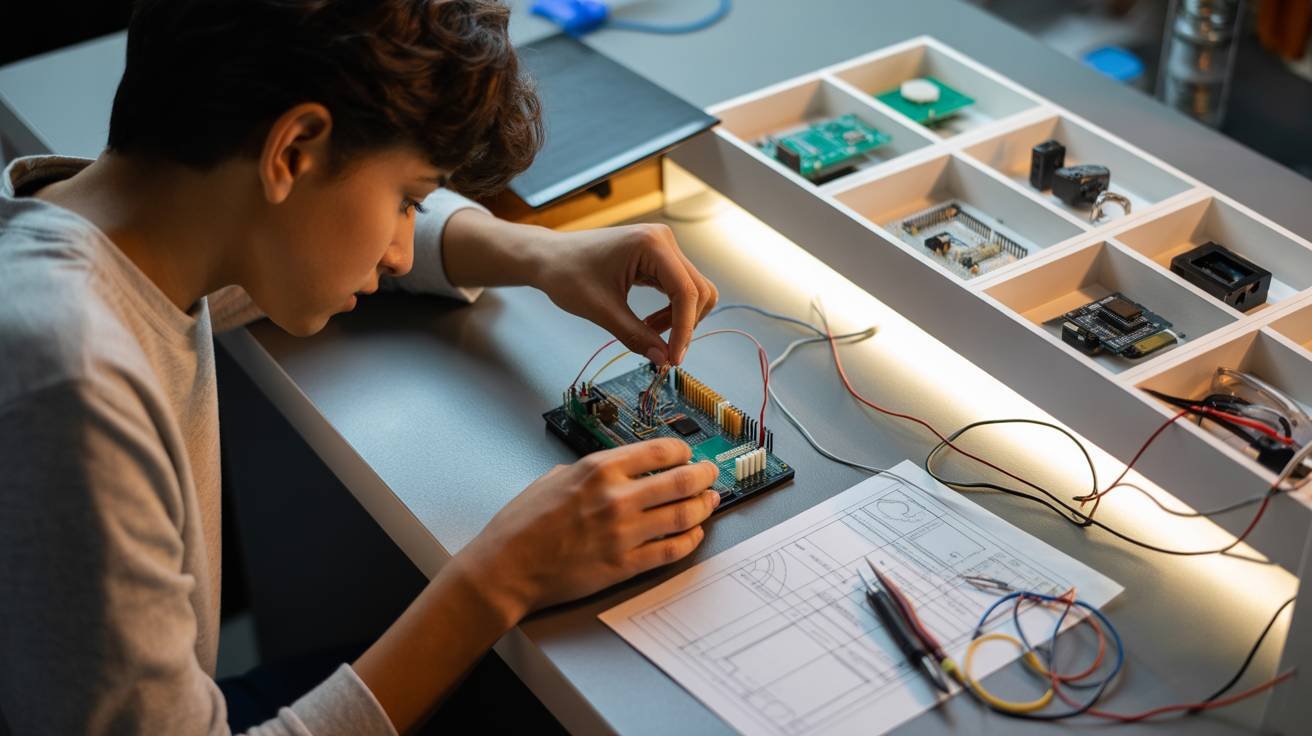
Critical thinking grows fastest when it is applied to something real. Building, repairing, cooking, budgeting, or planning a trip all force you to predict, test, notice what went wrong, and adjust — the exact cycle of critical thought. That is why DIY projects that improve problem-solving and analytical thinking are such effective training: the feedback is immediate and honest, and a wrong assumption shows up as a shelf that does not fit. Choose one practical project a month and review your decisions afterwards: what did you assume, what surprised you, and what would you test first next time?
Habit 5: Write to Think, Not Just to Record
Writing forces vague thoughts to become precise ones. Keep a short thinking journal: when you face a decision or read something important, write the claim, the evidence for it, the evidence against it, and your conclusion. Half a page is enough. Over weeks, you will see your own patterns — the sources you trust too quickly, the topics where you argue emotionally. Organised notes make this review far easier, which is why the methods in our guide to organising notes for review and revision pair so well with a thinking journal.
Habit 6: Discuss and Defend Your Views
Explaining your reasoning to someone else exposes gaps that silent reading hides. Join a study group, debate a friend, or teach a concept you have just learned and invite questions. If you cannot answer a fair challenge, that is valuable information — it marks the exact place where your understanding is thin. Keep the tone curious rather than combative; the goal is stronger reasoning, not winning.
Habit 7: Slow Down Your Information Diet
Critical thinking needs time and attention, and both are scarce if your inputs are rushed. Read fewer, better sources. Finish articles before judging them. When a headline triggers a strong emotion, treat that feeling as a signal to check the claim more carefully, not less. Protecting your focus helps here too — the techniques for managing distractions and staying motivated during study sessions apply just as well to everyday reading.
A Simple Weekly Practice Plan
- Daily (5 minutes): pick one claim you saw today and run the five questions from Habit 1.
- Twice a week: write one journal entry using the claim–evidence–counter-evidence–conclusion format.
- Weekly: discuss one topic with a friend or study partner and defend your view out loud.
- Monthly: complete one hands-on project and review the assumptions you made during it.
Final Thoughts
You now know how to improve critical thinking skills in a way that fits real life: ask sharper questions, label assumptions, test rival explanations, practise on real problems, write your reasoning down, and invite challenge. None of these habits requires special equipment or a course — only repetition. Start with the daily five-minute exercise, keep it up for a month, and you will notice the change yourself: claims will look different, decisions will feel calmer, and your own arguments, in essays and in conversation, will stand on firmer ground.